
Key Areas of Cardiovascular Health
Reviewing the areas of cardiovascular disease you need to be managing | Longevity Medicine Essentials #4

A quick update
My wife and I welcomed our first child a couple of weeks ago, which has rekindled my focus on my mission - to bring Longevity Medicine to 1 billion+ people.
From Bryan Johnson’s $1m program to tech companies with massive fund raises, Longevity is being validated as a legitimate industry, but it’s very much pay-to-play and tailored to the ultra wealthy.
This is a false narrative. The key to Longevity Medicine is taking a new approach to clinical care, not the $$ spent. You can spend only $100 and be on the right path.
What this means for the Longevity Now newsletter
The goal of this newsletter is to increase access to Longevity Medicine. I want to make it easy for you to get the care that you should be receiving since I can’t see you all as patients.
To meet this goal, I’m circling back to where I started - Longevity Medicine Essentials.
I’ll be mapping out the protocols I use for my patients over the coming months, broken down into digestible weekly articles. I’ll detail exactly what tests to get, what longevity-grade targets are, and how to get to them.
It is difficult to implement these protocols without a physician, but having this information is the crucial first step.
I don’t believe this knowledge should be siloed behind a paywall, it’s too important to humanity. The fountain of youth is meant to be shared, not sold drop by drop.
Today’s topic - Key cardiovascular segments
Human physiology is incredibly intricate, and the cardiovascular (CV) system is at the top of the complexity rankings.
It would take a full book to detail out all the aspects of CV health I assess, so I’m starting off with a high level picture of the different segments that one needs to manage. If any of these areas are suboptimal, you risk serious cardiovascular disease.
All of these risks have been validated by rigorous clinical studies
This article will explain what the following CV segments are, why they matter for longevity, and how we assess them. In the coming weeks I’ll dive into each of these explaining the markers I test and my approach to optimizing them.
Atherosclerosis
Arrythmia
Aneurysm
Blood pressure
Cholesterol
Inflammation
Kidney function
Sleep apnea
Misc factors
If this content resonates with you, please subscribe to support my mission to bring Longevity Medicine to 1 billion + people 🙏
Atherosclerotic cardiovascular disease (ASCVD)
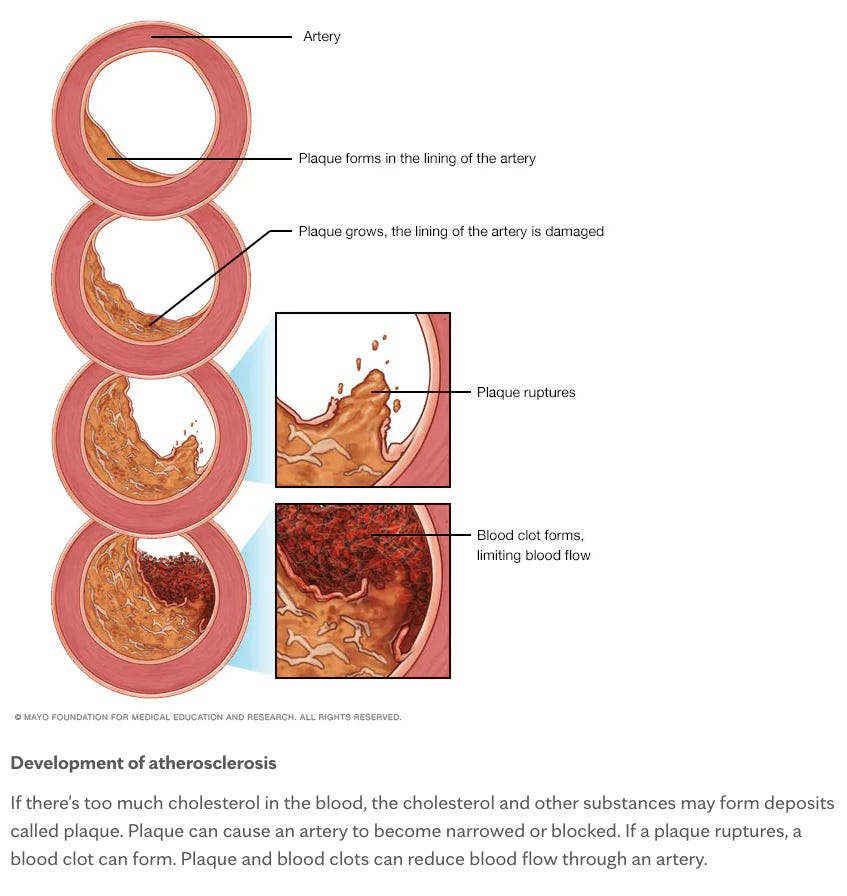
ASCVD, aka atherosclerosis, is the disease that leads to the narrowing of blood vessels, limiting oxygen supply to the organs, muscles, and tissue around that area. It’s the #1 killer in the world and incredibly common due to our modern lifestyles.
It’s truly a disease of blood vessels so it can impact any part of your body, but we primarily focus on the impact on the heart (heart attacks) and brain (strokes) since they are such vital organs and where issues most frequently arise.
I evalute ASCVD status is through imaging - typically a coronary calcium score or a coronary CT angiogram, though there are a few less commonly used tests that can be performed (more on this in the next article).
Arrythmia
The four chambers of the heart beat in synchronously through coordinated electrical signals. An arrythmia is when there is a disruption in this signaling, which over time can lead to significant permanent problems in the heart muscle and valves.
It’s critical to screen for arrythmias because of the long term impact they can have on the structure of the heart and also because they can predispose you to having blood clots that could turn into strokes.
I take combined approach of a clinical history, family history and an electrocardiogram (ECG) to evaluate arrythmias.
Aneurysm
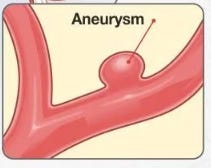
An aneurysm is a weakning in the side of a blood vessel wall. Over time that weakening leads to an outpouching of that part of the blood vessel because it’s the path of least resistance for blood. Eventually it can turn into a balloon that is at risk of bursting and causing bleeding in that area.
Aneurysms are most common in the brain and GI tract, where unfortunately a bleed can be life threatening. They are truly silent killers and tend to run in families, so it’s important to determine who is at greater risk of aneurysm.
I screen all my patients for risk of aneurysms and for those at a higher risk we get an MRI, typically in the brain but often in the GI tract as well.
Blood pressure
Blood pressure is exactly what it sounds like! The amount of pressure in your vascular system will over time predispose you to the CV events we want to avoid - heart attacks, strokes, aneurysms, and arrythmia. Abnormal blood pressure is very easy to detect and also easy to fix, which is why it should never be left unregulated.
I insist that all of my patients have a blood pressure cuff at home - this is by far the best way to measure blood pressure.
Cholesterol
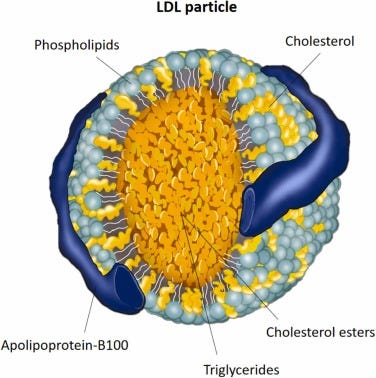
Ah yes, the boogeyman we have all heard of! Cholesterol is in every cell of our bodies so it’s too broad a term. Really we are concerned with specific proteins that carry cholesterol and cause ASCVD - apolipoprotein B (apoB).
When there are too many of these apoB molecules, our arteries get clogged up and disease occurs. This is exceedingly common and the #1 biomarker I work on with my patients, but the good news is there are many cheap medications and diet / supplement options to improve it.
I check a variety of cholesterol molecules for all of my patients, but apolipoprotein B is the big one.
Inflammation
Inflammation is another household name these days, but like cholesterol it’s too broad of a term. There are hundreds of types of inflammation in the body. Hundreds. And we are just starting to understanding how some of them influence overall health. So at the moment we try to lower inflammation across the board.
From a CV standpoint we know that general inflammation and inflammation specific to autoimmune diseases (e.g. psoriasis) lead to worsening ASCVD, and they can be potent risk multipliers.
In my practice we check for general inflammation through blood tests (hs-CRP, ESR) and use a combo of symptoms and blood tests to check for autoimmune diseases.
Kidney function
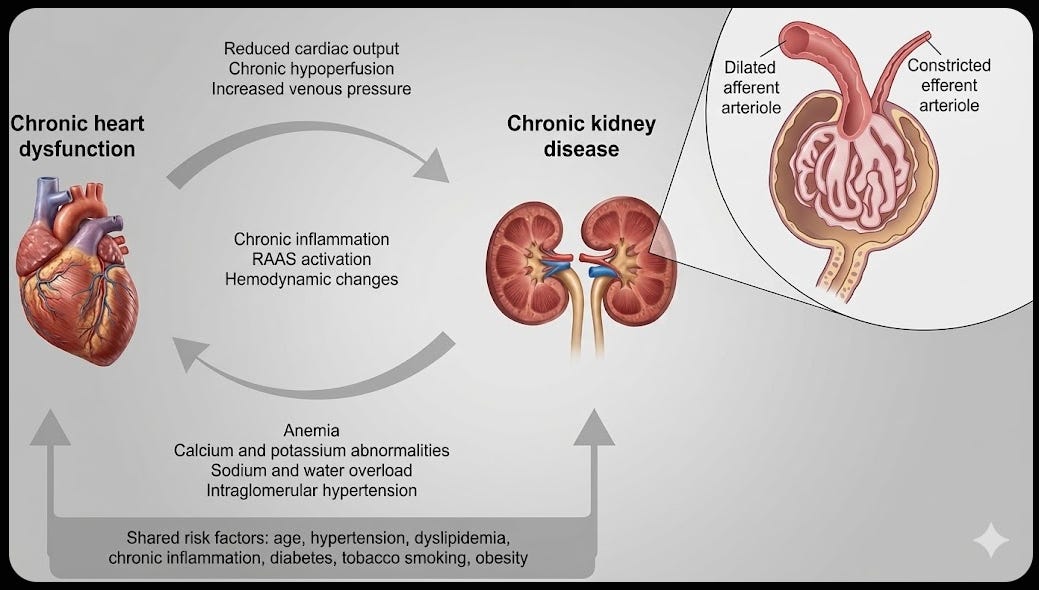
The kidneys are a master regulator of electrolyltes, and electrolytes are how your body manages blood pressure. This relationship is why kidney health is integral to heart health, and typically when kidneys are damaged it causes death by way of CV disease.
I evaluate kidney function through blood (creatinine, cystatin C) and urine tests (urinalysis).
Sleep apnea
You may already be familiar with sleep apnea because it’s incredibly common. Apnea is a temporary pause in breathing, which causes a surge of adrenaline in your body, keeping your body in “fight or flight” mode.
Being persistently in fight or flight mode has significant impacts on your heart and vascular system, causing higher blood pressure and direct damage to the heart.
I assess for sleep apnea through a symptom check and have a low threshold to get patients an overnight sleep study test, which is most commonly done at home.
Misc factors
There are a few other factors that have been proven to increase CV disease risk and are all nutritional in nature:
Uric acid - when levels are too high or too low they cause direct damage to the blood vessel walls and increase inflammation
Homocysteine - an amino acid breakdown product, elevated levels directly damage blood vessel walls and increase blood pressure
Omega3 fatty acids - low levels directly damage the blood veseel wall, increase inflammation, and raise blood pressure
All of these are measured via blood tests
Up next - Atherosclerosis deep dive
The next article I will do a deep dive into atherosclerosis, the most important disease process within cardiovascular health to manage. I will specifically cover:
The different tests I use to assess atherolscerlosis status
How to interpret the test results
What interventions I suggest based on the results
Thank you for reading! If you found this helpful and think someone might as well, please share it with the link below.
The Complete Longevity Medicine Essentials Series
1 | What is Longevity Medicine, Why Should You Care, and How to Start
3 | The Pillars of Longevity Part 2 - Functional Capacities to Optimize
4 | Key Cardiovascular Segments