
Arrythmia
Detecting & Managing Dangerous Yet Treatable Disease | Longevity Medicine Essentials #6
Did you know that over 50 million people worldwide suffer from abnormal heart rhythms, aka arrhythmias, right now?
Not just the random strange heart beats we get from time to time (palpitations), but sustained, “why isn’t this going away” beats.
That means you are likely to experience or know someone who will experience arrythmias and this article is for you.
The good news is arrythmias can be easily identified and are often treatable, so I make sure every patient in my practice is screened - I’ll show you how.
In this article I’ll review:
What exactly arrythmias are
Why are arrythmias a big issue
How to evaluate arrythmias, including wearables
How to manage arrythmias
2 quick things before we start:
Save this guide for reference (hopefully you never need it)
Share this with anyone who might worry about arrythmias
1. What are arrythmias anyways?
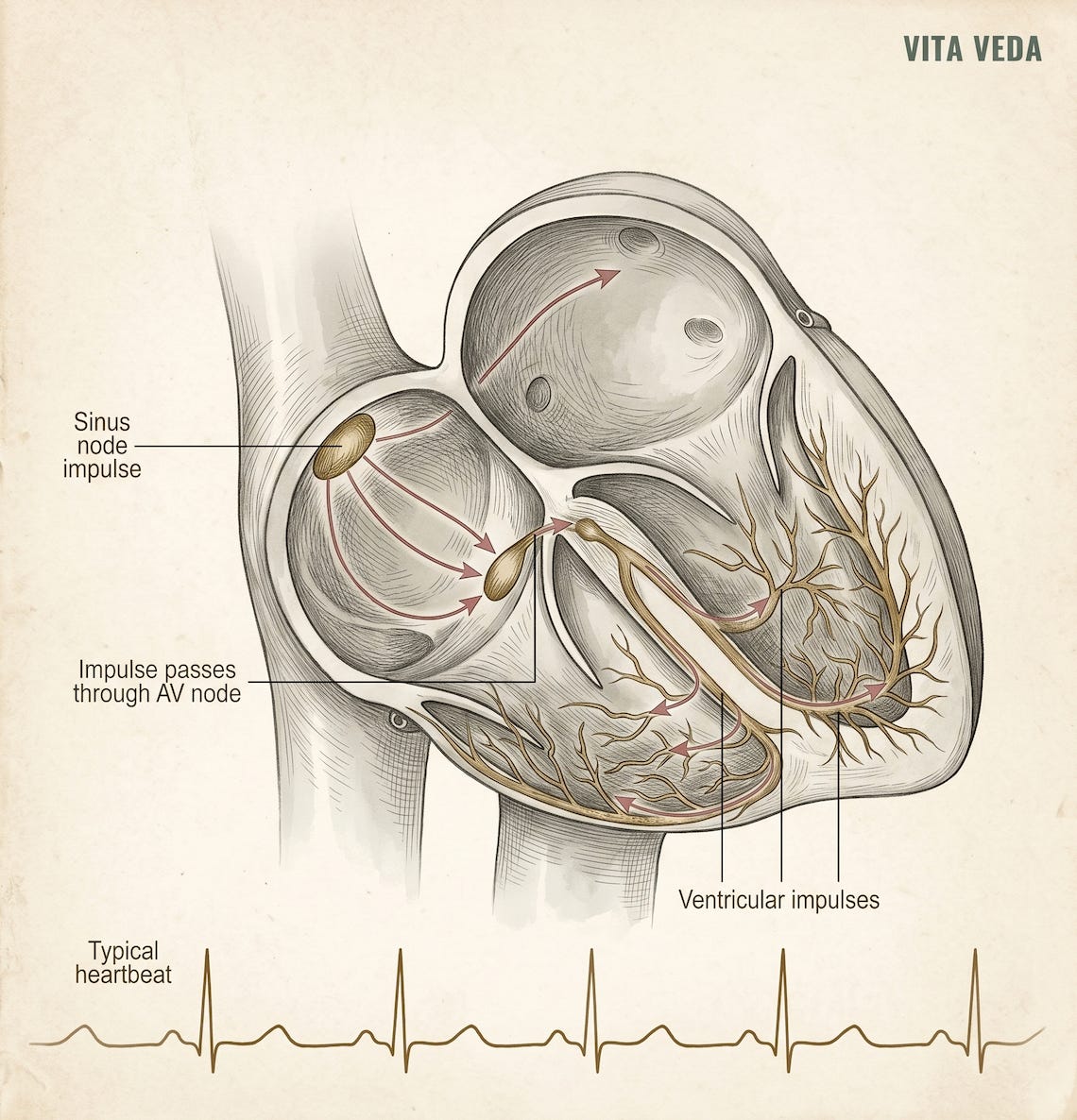
Your heart beats in synchronized ways through electrical signals. These lead to a regular rhythm of your heart beating, with the small chambers (atria) squeezing first to fill up the large chambers (ventricles), which then push blood throughout your body.
Arrhythmia are irregularities in this synchronization, typically due to a physical issue in the heart impacting the electrical conduction. This can happen for a lot of different reasons (heart attack, autoimmune disease, infection, etc.)
There are many different kinds of arrhythmias, so it’s helpful to know some categories:
Intermittent vs. sustained
How long do the abnormal beats last? Is it a few here and there, or is it continuous?
The most common arrhythmias are one-off, random beats of your atria or ventricles that don’t cause damage.
Regular vs. irregular
Some arrhythmias have the normal pattern, it’s just too fast or too slow. Others result in a completely different heart beat
Regularly irregular, or irregularly irregular
If the pattern is not normal, does it repeat in the same way (regularly irregular), or does it change every time (irregularly irregular)?
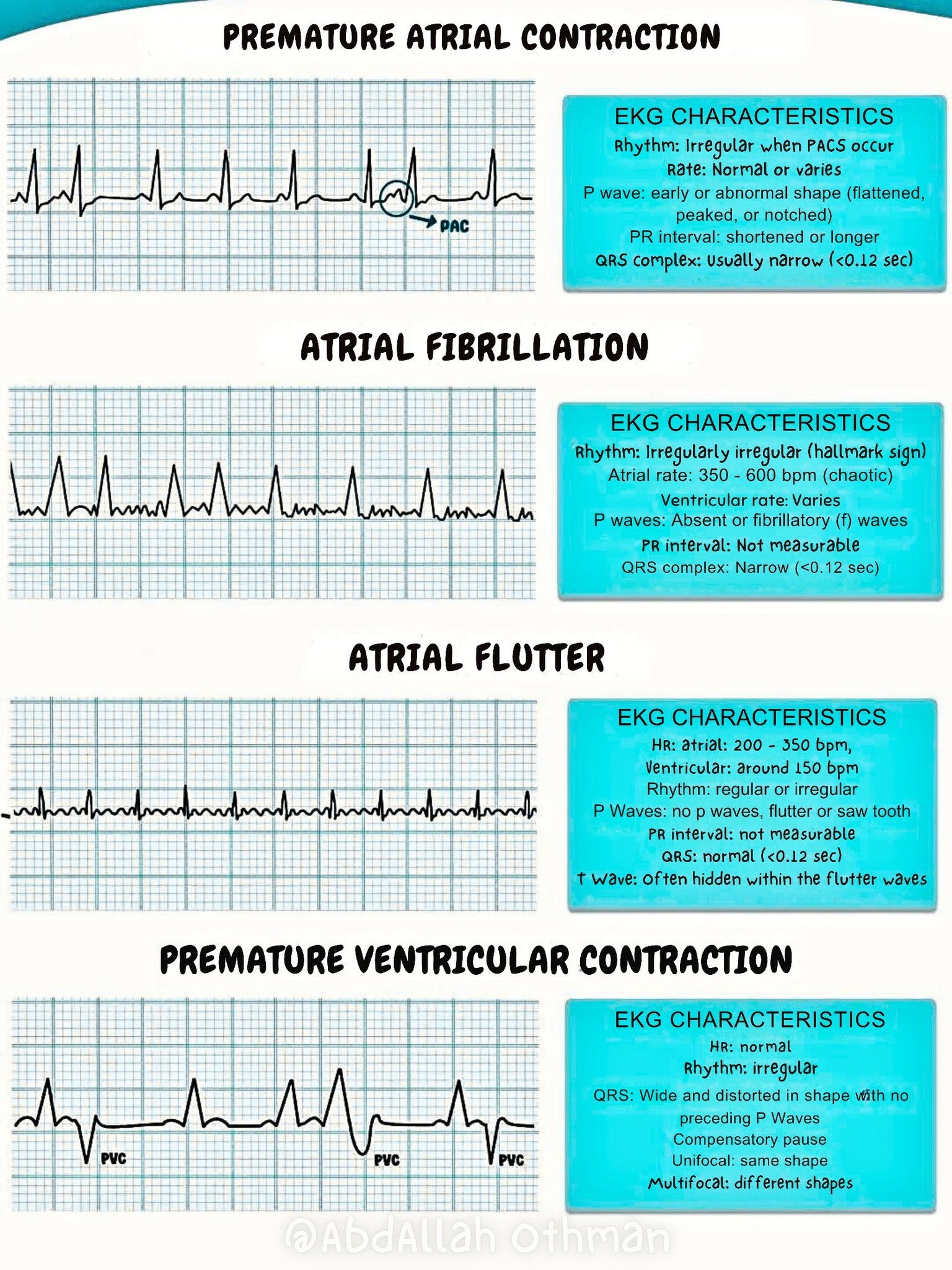
The most common arrhythmia is called atrial fibrillation or AFib. It can occur for a number of reasons and if left untreated can lead to serious heart damage, stroke, or worse.
There are many other, less common types of arrhythmias as well:
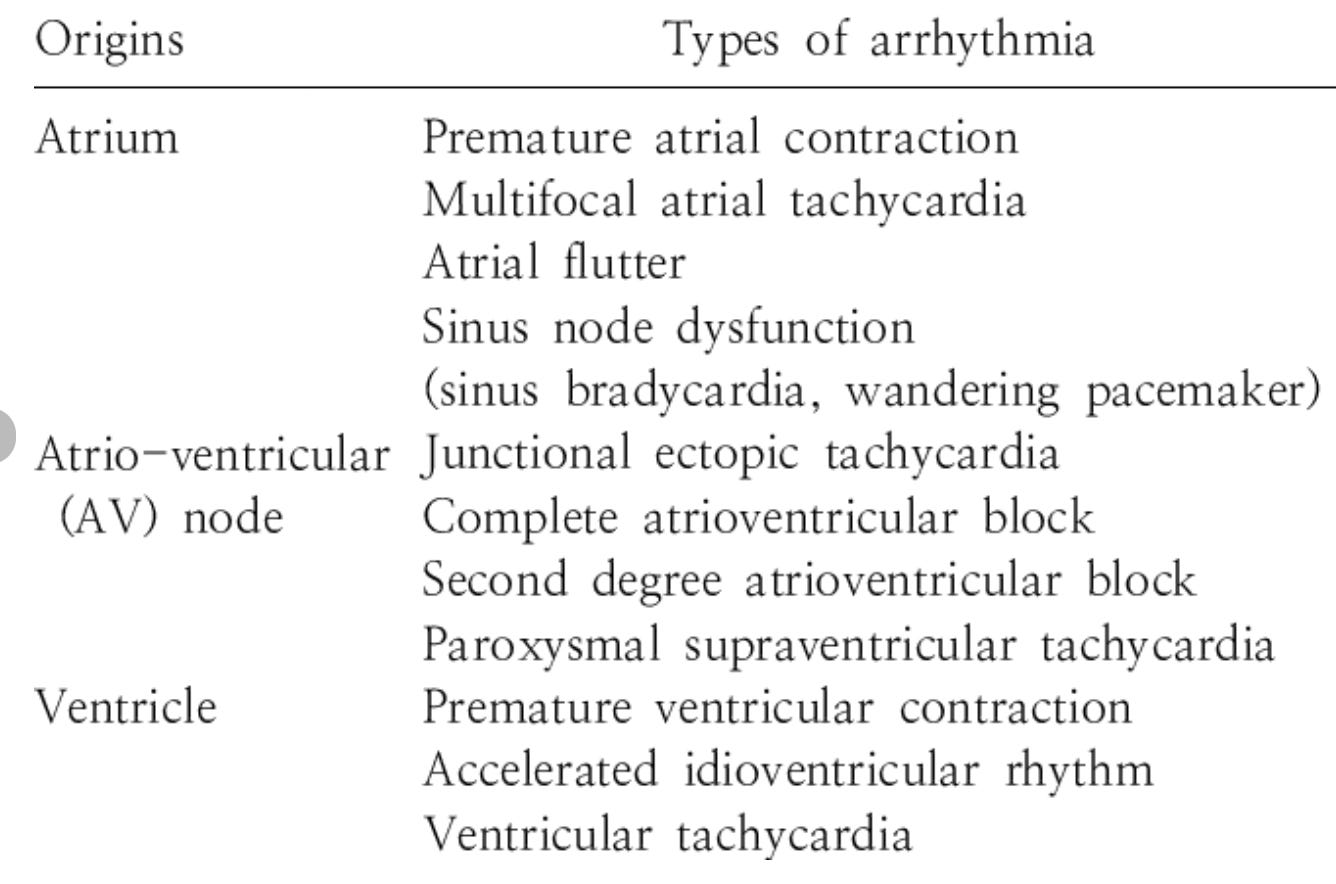
As with most diseases, a good doctor will identify it early and do the first steps of management, but once it gets complicated it’s important to see a specialist.
Subscribe to help my mission - to bring Longevity Medicine to 1 billion + people 🙏
2. Why arrythmias are a big issue in longevity
Arrhythmias are important because they are common, underdiagnosed, are typically quite treatable, and can lead to serious issues.
A perfect place where a Longevity mindset makes a huge difference.
Over 50% of people experience an abnormal heart beat in their lifetime, and 33% will have Atrial fibrillation (Afib) - the most common sustained abnormal heart beat - at some point in life.
33% of ALL people! This is a massive number
OK so arrhythmias are common, but how dangerous are they?
One of the biggest issues with arrhythmias is blood clots. When your heart isn’t beating properly, blood tends to pool in the chambers of the heart (instead of flowing through the body), and pooled blood tends to clot.
A lot of the downstream effects from arrhythmias are due to blood clots getting pumped into circulation (e.g. a stroke). Let’s dive into some specifics.
Lifespan impact
Having Afib leads to a 2.4x higher risk of death in men and 3.5 higher in women - that’s a pretty compelling lifespan statistic.
Now correlation is not causation, but you can imagine if your heart is not beating properly and throwing off blood clots, it’s going to decrease life expectancy.
Healthspan impact
Afib also leads to increased risks of other diseases that impact quality of life, so it’s a big healthspan issue as well.
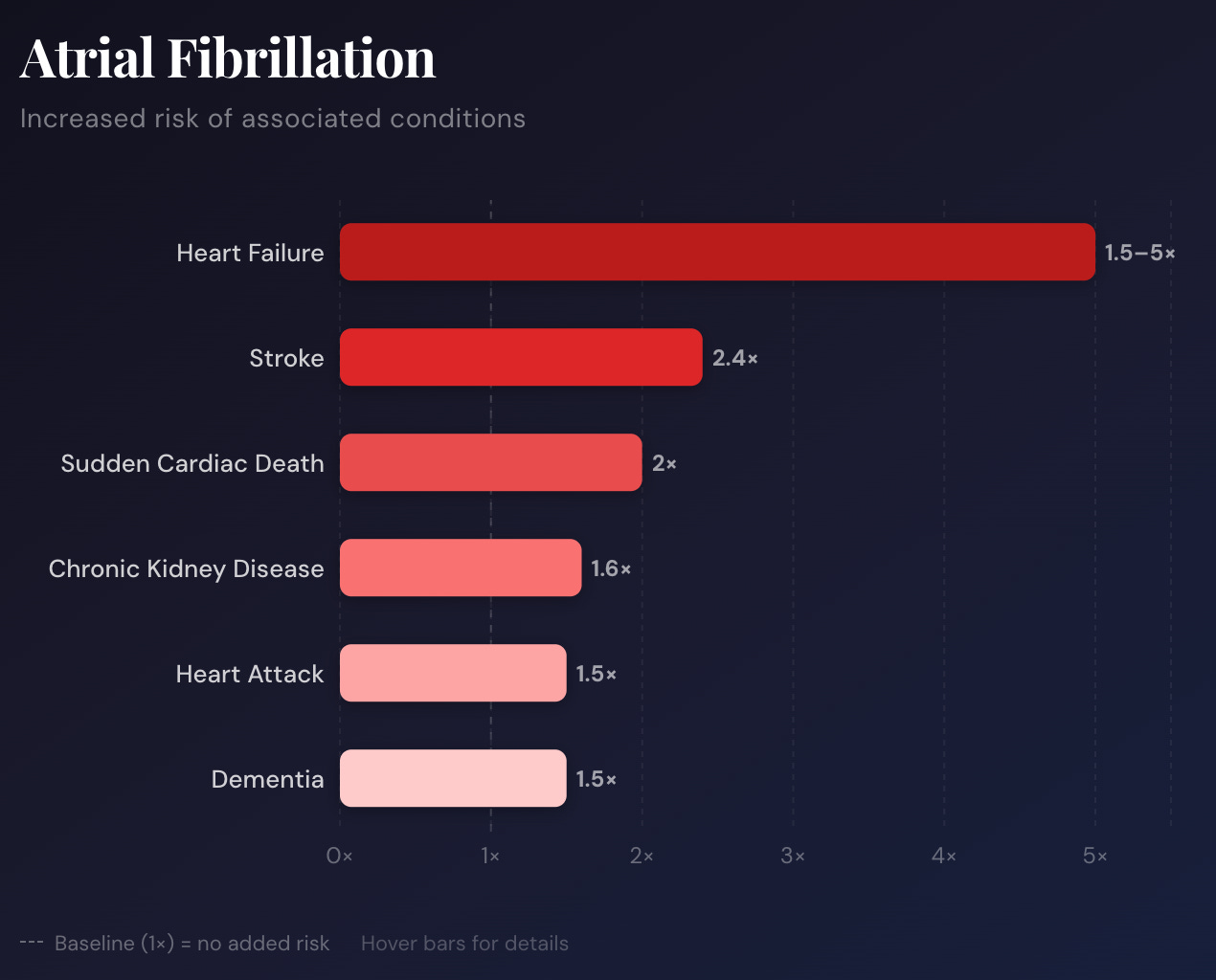
Not to mention the direct symptoms of Afib are quite unpleasant
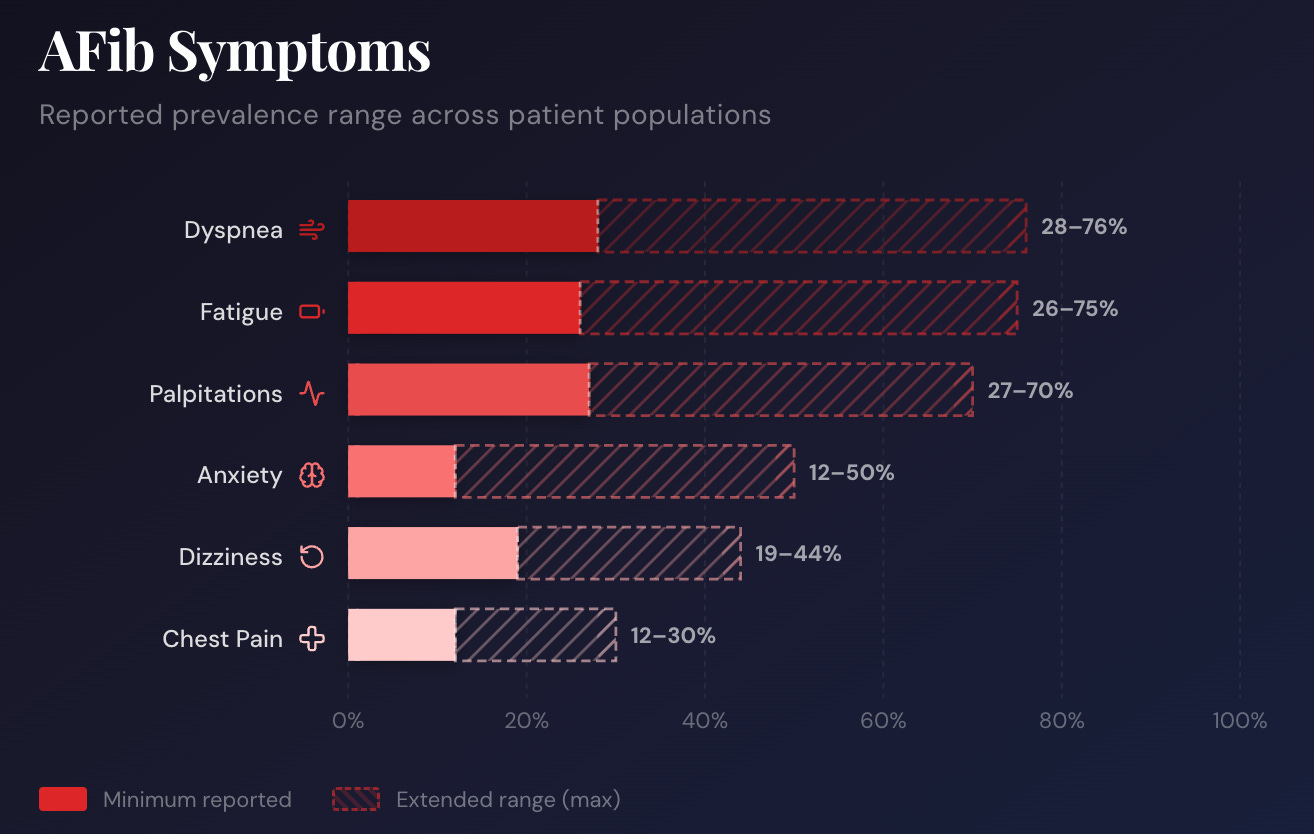
What about the other arrythmias?
Of the sustained arrythmias (meaning they continue unless you intervene), Afib is the least bad. Other ones can cause severe discomfort or even kill you within a minute (ventricular fibrillation).
Prefer video explanations? Check out my Youtube channel
3. How to evaluate arrythmias
If there is anything good about arrhythmias, it’s that we can detect them easily at low cost.
I’m going focus the scope of this on Atrial fibrillation (Afib) given it’s the most likely offender, but the same principles apply for any arrhythmia.
There is a long list of factors that could cause Afib so rather than assess each of those I prefer to monitor patients for any abnormalities.
Causes of Afib include = prior heart attack, prior heart valve disease, sleep apnea, high blood pressure, stress, lung disease, thyroid disease, viral infection, alcohol use, medications, supplements
Ways to assess arrhythmias
History
Good old fashioned questions! Most arrhythmias will have symptoms and some kind of history of risk factors that should be asked annually.
Connected device / wearable
These days we have a lot of sophisticated hardware on our wrists, which is enough to pick up an abnormal pulse. In my ideal world I’d get 1 week’s worth of data to review from every patient so we can find anything subclinical
Many wearables are FDA approved for detecting Afib in asymptomatic people including the Apple Watch, Fitbit, Google Pixel Watch.
Note these devices are not yet approved to detect other types of arrythmias
EKG
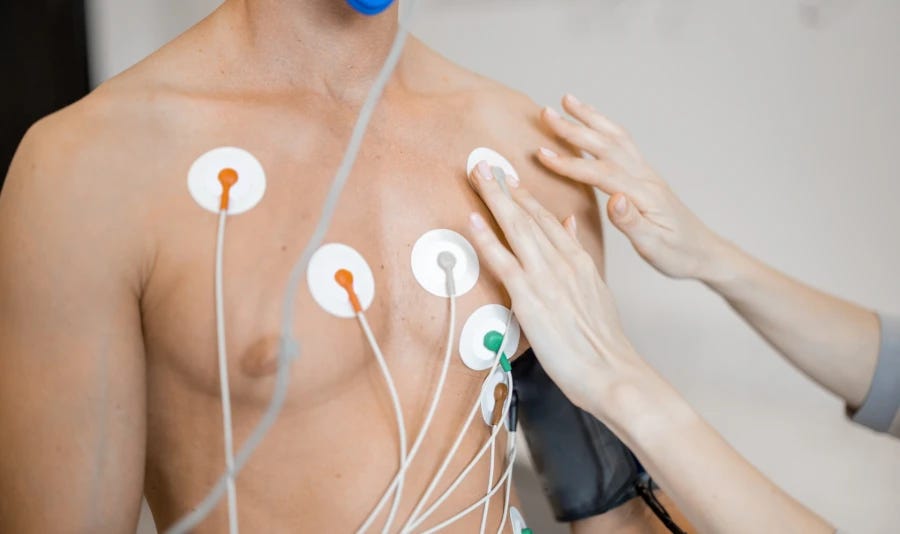
Cheap, widely available, and easy, the perfect diagnosis test. I have a low threshold for getting a 12-lead EKG (or ECG) for a patient because it’s great data to have and easy to do.
The main downside is you are only seeing 10 seconds of data, so an intermittent or on-again-off-again arrhythmia can stay hidden
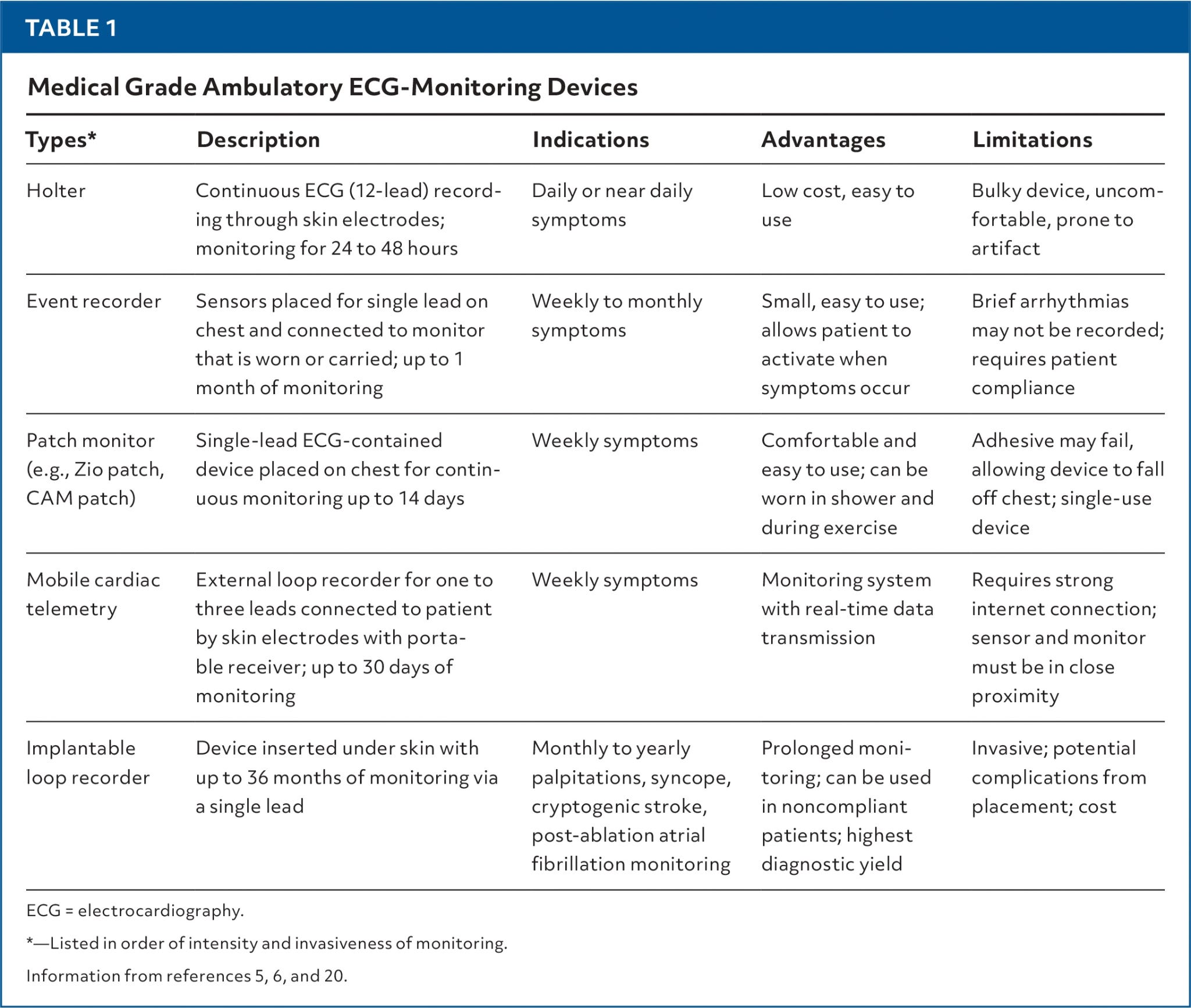
Medical grade monitoring devices
There are more sophisticated ways to pick up on arrhythmias that can last weeks.
If I’m even thinking about these then I’m referring to a cardiologist
4. How to manage arrythmias
The general principles for arrythmia management are:
1) Stabilize the situation
Specifically making sure blood circulation is adequate —> if not, go to the ER
2) Get the heart rate to a normal range (e.g. 60-100 beats per minute)
Typically done with medications like beta blockers.
3) Manage any blood clot risk
Medications like clopidogrel are used for this, though the risk of bleeding is carefully assessed.
4) Get the heart rhythm back to being normal
Also done with medications, of which there are a variety.
5) Surgery to fix any structural issues or implant a device
Some arrhythmias can only be fixed by removing part of the heart muscle or implanting a device that detects them and blocks it with shocks.
6) Address underlying risk factors
Anything that could be causing the stress that led to an arrhythmia.
When should a cardiologist get involved?
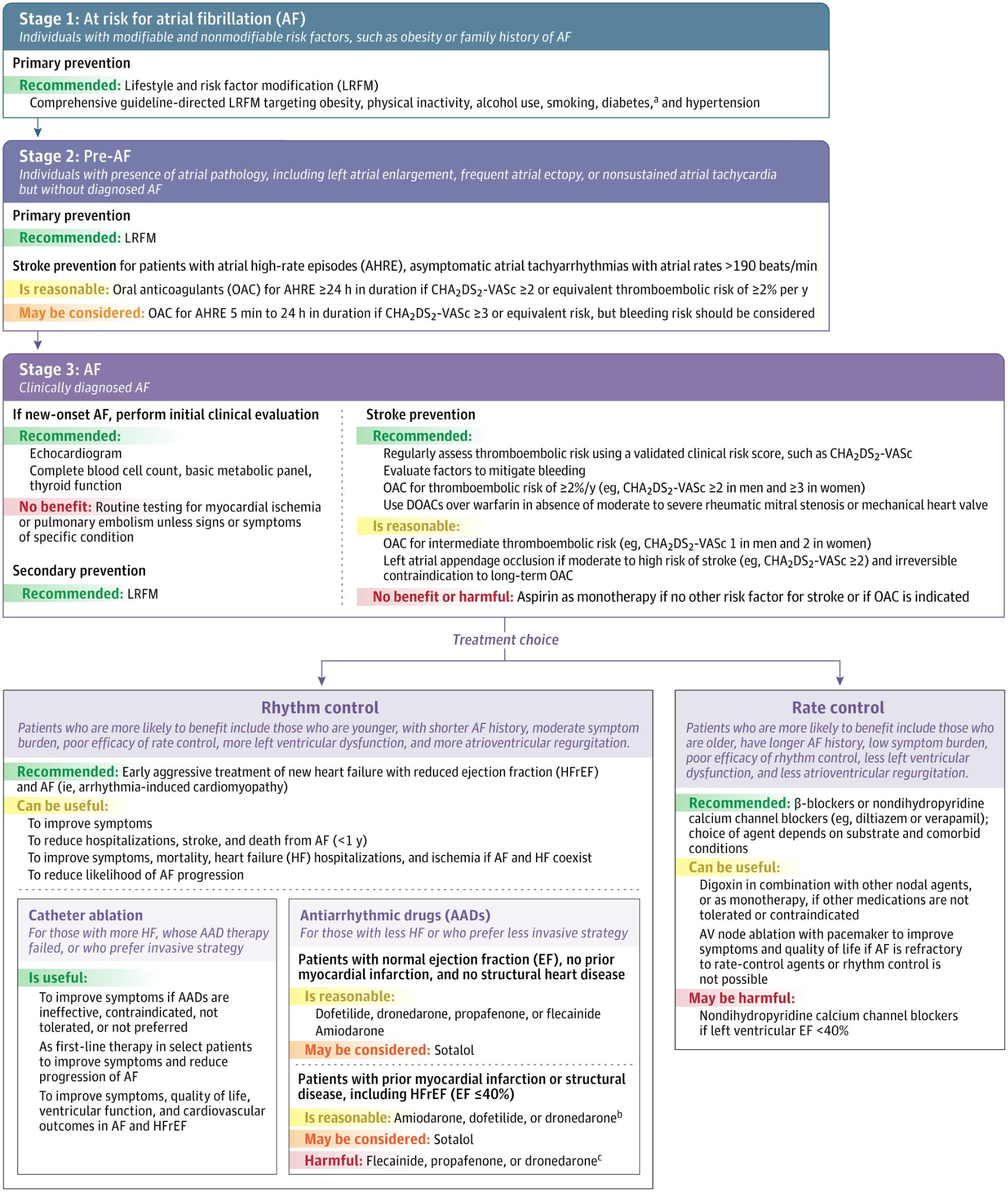
There’s a decent amount a good longevity (or primary care) doctor can do to help manage arrythmias, especially Afib. But things can get very complex very fast as indicated by the graphic below, so knowing when to get specialist help is key.
A good longevity doctor can and should do the following:
Make sure you’re stable — no circulation or blood pressure issues
Get your heart rate back to a normal level
Prescribe anti-clotting medications if needed (for stabilization purposes)
Start searching for underlying risk factors that could have triggered the arrythmia
Our cardiologist friends come in for:
Advanced medication management and decision making
E.g. is the bleeding risk of an anti-clotting medication worthwhile?
Prescribing medications to stop the irregular rhythm
Managing rare and more complex arrythmias
Surgery or implantation of pacemakers or other devices
5) Please ask me any questions you might have!
I hope you found this helpful and this can be a longstanding guide for you or anyone you know who may suffer from arrythmias.
If you have any questions or want me to dig deeper please let me know. It’s my mission to bring this information for free in easy to understand ways. Any direction from you on what you need is invaluable
Next - Aneurysms
In the next article, I’m going to talk about aneurysms — abnormalities in blood vessel walls most commonly found in the brain and abdomen. These are a big deal because they can suddenly burst, rapidly leading to death. More coming soon!
If you found this article helpful, please help a friend and share it with the link below.
If someone did send you this, thank them and subscribe for free here:
The Complete Longevity Medicine Essentials Series